
Advice and inspiration
What packing tape for boxes? Acrylic, rubber, or paper?
What packing tape for boxes? Acrylic, rubber, or paper?
Packing tape is one of the most important elements of securing packages. Even a well-chosen box will not fulfill its function if it is sealed with weak tape, improperly chosen for the weight of the shipment, the type of cardboard, or transport conditions. That is why many companies ask: which packing tape for boxes will be the best – acrylic, rubber, or paper?
There is no single tape that is perfect for every application. An online store sending light packages needs a different tape, a warehouse packing heavier boxes needs another, and a brand that wants to pack ecologically and aesthetically needs yet another. In this guide, we explain the differences between popular packing tapes and when to choose a specific type.
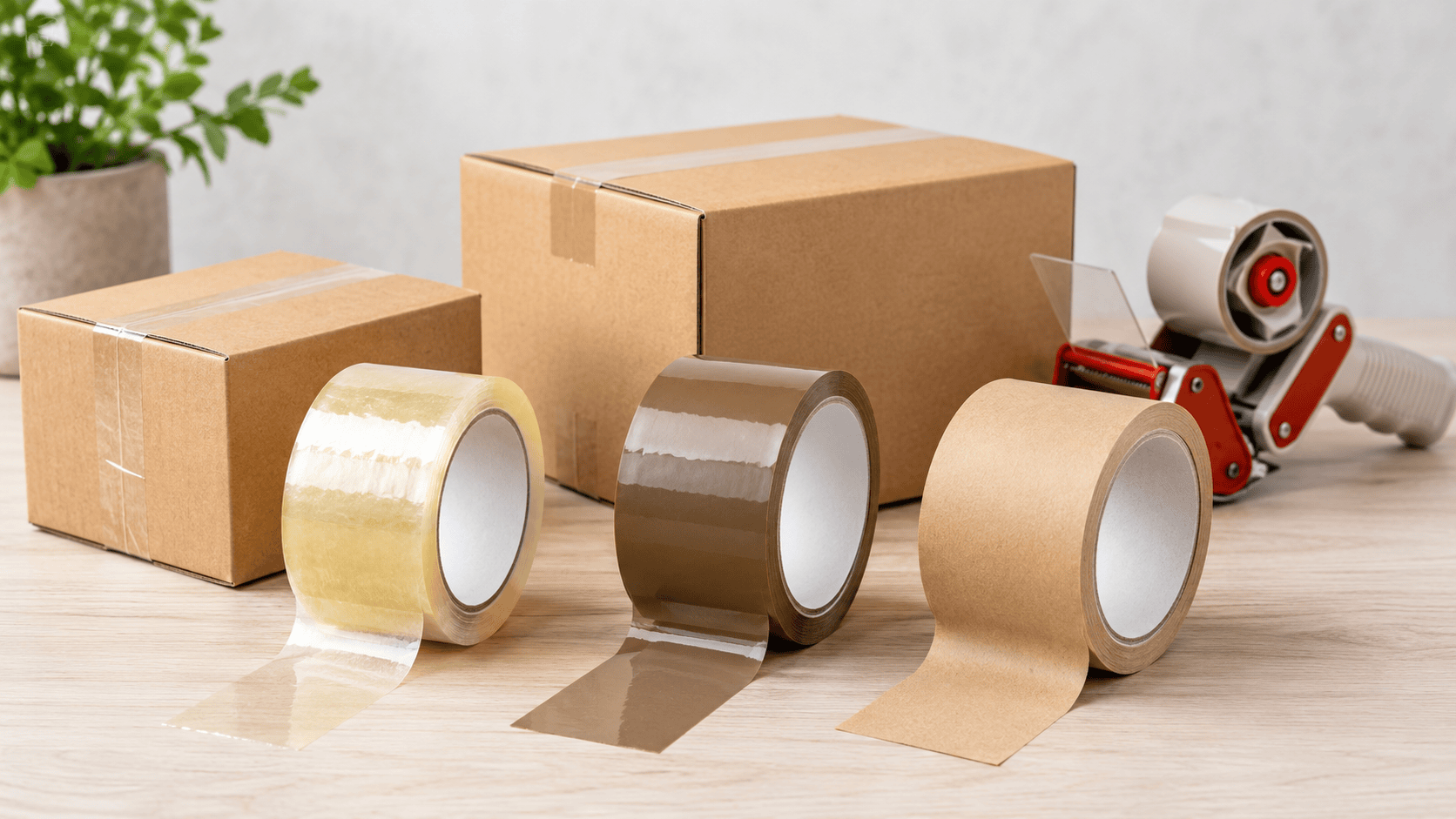
Table of Contents
- Why does choosing the right packing tape matter?
- Acrylic tape – when to choose it?
- Rubber and solvent tape – for tougher applications
- Paper tape – aesthetics, ecology, and kraft packaging
- Printed packing tape – when is it worth it?
- Comparison table of packing tapes
- How to properly seal boxes?
- Most common mistakes when choosing tape
- FAQ – questions about packing tapes
Why does choosing the right packing tape matter?
Packing tape is responsible for closing the carton and maintaining its flaps during transport. If the tape does not adhere well, peels off the cardboard or breaks during handling, the package may open and the product may become damaged or dirty.
In an online store, a ribbon problem can mean a complaint, reshipment, additional handling costs and a poor customer experience. Therefore, it is not worth choosing a tape based solely on price. You need to take into account the weight of the package, the type of box, the storage temperature, the method of packaging and whether the shipment will be transported individually, in a collective box or on a pallet.
A good starting point is the category packing tapes, where you can choose a tape for everyday packing of boxes, e-commerce shipments, courier parcels and packaging with company print.
Acrylic tape – when to choose it?
Acrylic packing tape is the most frequently chosen type of tape for everyday packaging of light and medium-sized parcels. It is universal, economical and works well in standard warehouse conditions. It is a good choice for online stores, offices, shipping points and companies that regularly pack moderate weight boxes.
Acrylic tape is well suited for closing cartons of clothing, textiles, documents, light accessories, cosmetics, paper products and small e-commerce items. The most frequently chosen width is 48 mm because it allows you to conveniently seal a standard cardboard box and fits typical dispensers.
It is worth remembering that acrylic tape works best on a clean, dry cardboard surface and in stable conditions. If the packages are heavy, the cardboard is rough or dusty, or the shipment takes place in cold weather, tape with a stronger adhesive may be a better solution.
See the category acrylic tape. An example of a standard everyday packaging product is brown acrylic packing tape 48 mm / 50 m.
Rubber and solvent tape – for tougher applications
Rubber tape, often also referred to as solvent tape, is chosen when stronger adhesion and greater resistance to more difficult conditions are needed. It works well with heavier boxes, more demanding surfaces and packages that may be stored or transported at variable temperatures.
Rubber adhesive tapes are a good choice for closing heavier shipments, bulk cartons, packages with higher value products, warehouse packaging and cartons that need to remain tightly closed for an extended period of time. In practice, they are often chosen when ordinary acrylic tape begins to peel off or does not provide a sufficient sense of security.
Rubber tape will be particularly useful when packing heavier cartons, parcels for courier transport, packaging sent in winter and parcels that may go to a warehouse, sorting center or on a pallet.
If you pack heavier boxes or need a stronger closure, please check the category rubber bands.
Paper tape – aesthetics, ecology, and kraft packaging
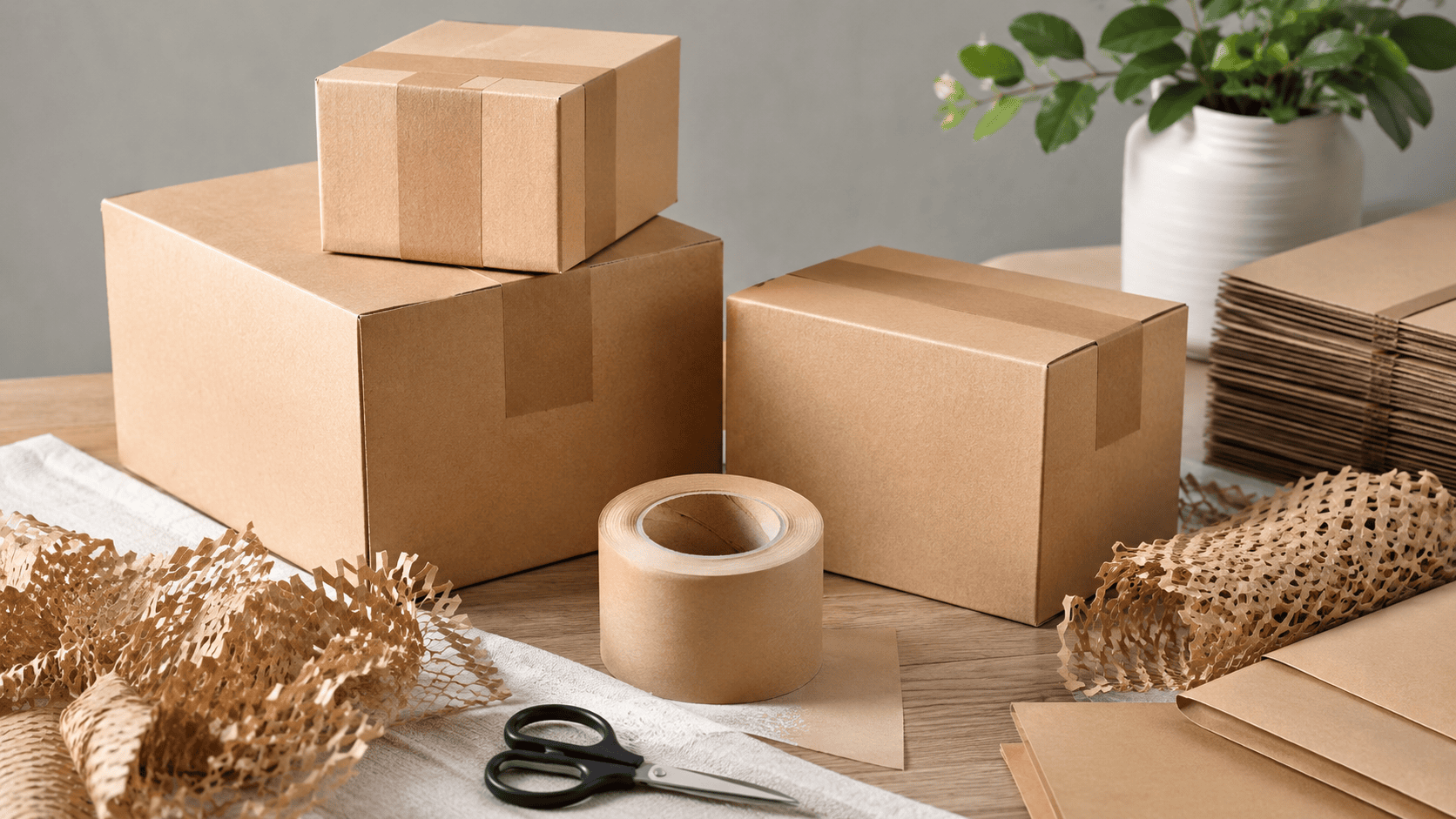
Paper tape is a solution for companies that want aesthetic, natural and consistent packaging with kraft packaging. It looks good on cardboard and fits ecological, handicraft, cosmetic, gift and premium brands. It is often chosen where the way the package is packed is part of the customer experience.
Paper tape can be a good choice for shipping cartons, gift wraps, natural product packages, and shipments that need to look more elegant than a standard box sealed with plastic tape. Its advantage is its natural appearance and the ability to create a coherent package together with kraft cardboard, paper filler and a label.
However, it is worth paying attention to the type of glue and the purpose of the specific paper tape. Not every paper tape will be best for very heavy boxes. For larger loads, it is better to choose a stronger version, for example paper tape with rubber or solvent glue.
See the category paper wrapping tapes. If you want to combine an eco-friendly look with your brand identity, check it out too printed paper tape.
Printed packing tape – when is it worth it?
Printed packing tape is a solution for companies that want to use shipping as a part of brand promotion. The tape can feature a logo, store name, website address, slogan, warning sign, or customer information. This way, an ordinary box becomes more professional and recognizable.
Printed tape works well in e-commerce, wholesale, manufacturing companies, gift shops, and premium brands. It can also increase shipment security, as cutting or tearing printed tape is easier to notice than with regular transparent tape.
In AWIH's offer, the category available is company printed packing tape. An example of a product is acrylic printed packing tape 48 mm / 66Y, 360 rolls.
Comparison table of packing tapes
| Tape type | When to choose? | Best use | When is it better to choose another? |
|---|---|---|---|
| Acrylic packing tape | For light and medium packages under standard conditions | Online stores, offices and everyday carton packing | For heavy boxes, cold or difficult surfaces |
| Rubber / solvent tape | For stronger and more durable closing of packages | Heavier boxes, courier transport, warehouse, pallets | When the priority is lowest cost for lightweight packages |
| Paper tape | When aesthetics, natural look and kraft packaging count | Eco-friendly brands, handicrafts, premium products and gift shops | For very heavy boxes without selecting a stronger version of glue |
| Printed tape | When the package is intended to promote a brand and look professional | E-commerce, wholesalers, company stores, premium packages | In case of a very small scale of shipments, when it is not profitable to order a larger batch |
How to properly seal boxes?
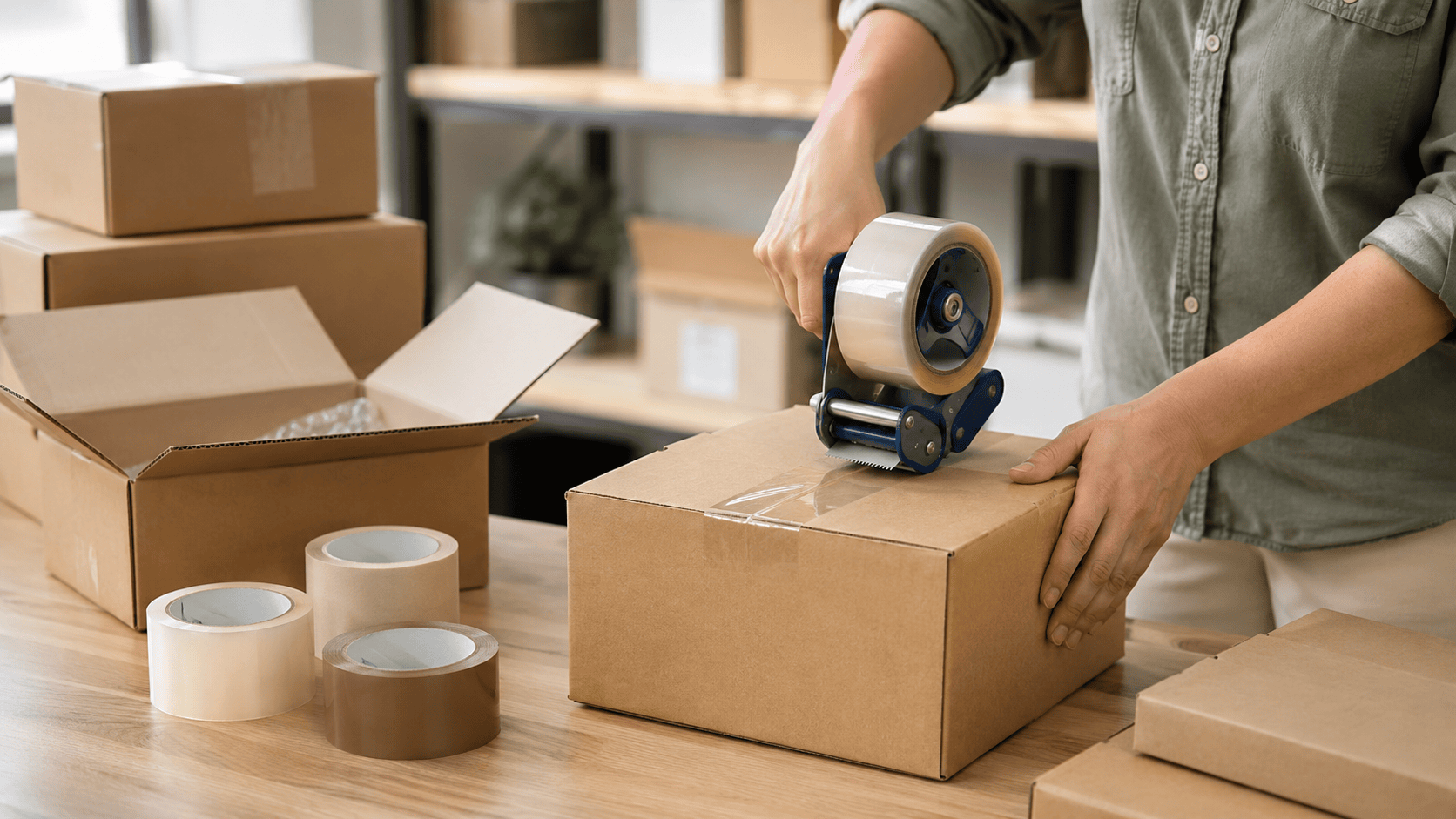
Even the best tape will not work well if applied incorrectly. The carton should be dry, clean and folded so that its flaps meet evenly. Apply the tape along the main join between the flaps, leaving extra tape at both ends of the carton.
For heavier parcels, apply extra strips of tape along the side edges or use the H-taping method. This seals the main join and both side seams of the carton, providing better protection and making accidental opening during transport less likely.
Use a dispenser to speed up packing. It helps guide the tape evenly, makes work faster and reduces wasted material. This is particularly important for online stores preparing many parcels each day.
Common mistakes when choosing packing tape
The first mistake is choosing the cheapest tape without considering the weight of the parcel. Tapes may look similar on the roll but differ in adhesive strength, backing thickness and resistance to transport conditions.
The second mistake is using acrylic tape for every parcel, including heavier or more demanding shipments. It is a good choice for standard parcels, but rubber-based or solvent tape is worth considering for heavier loads.
The third mistake is sealing dirty or damp cardboard. Even good tape may not adhere well to a dusty, greasy or wet carton. Make sure the carton is dry and clean before sealing it.
The fourth error is that the tape is too short. The tape should extend beyond the closing line of the carton and overlap its sides. Thanks to this, it holds the flaps better and reduces the risk of detachment during transport.
The fifth mistake is overlooking the appearance of the packaging. For the end customer, the parcel is part of the shopping experience. Paper tape or printed tape can improve the impression of your brand and make the shipment look more professional.
Which packing tape should an online store choose?
An online store should choose tape to suit the products it ships. If most parcels are light and standard, acrylic tape may be the basic choice. Stores shipping heavier products, sets or parcels in more demanding conditions should also keep rubber-based tape available.
If a brand wants to make its packaging stand out and build a more eco-friendly image, paper tape is a good solution. For larger scale sales, it is worth considering tape with a company print, which turns each package into an advertising medium.
FAQ — frequently asked questions about packing tapes
Which packing tape is best for cartons?
Acrylic tape is sufficient for most standard cartons. For heavier parcels, difficult surfaces or shipments exposed to changing conditions, choose rubber-based or solvent tape. Paper tape is a good option when appearance and a natural packaging style are important.
What is the difference between acrylic tape and rubber tape?
Acrylic tape is economical and versatile, so it works well for light and medium packages. Rubber tape has stronger adhesion and is better suited for heavier boxes and more demanding conditions.
Is paper tape suitable for shipping packages?
Yes, paper tape is suitable for sealing boxes, especially when you care about the natural appearance of the package. For heavier shipments, it is worth choosing a stronger version of paper tape with the appropriate adhesive.
What width of packing tape is most commonly used?
The most commonly used width of packing tape for boxes is 48 mm. It is convenient for daily packing, fits many dispensers, and secures the standard box flap joint well.
Is it worth ordering printed packing tape?
Yes, if the company sends parcels regularly and wants to build brand recognition. Logo tape improves the appearance of the shipment, makes the package stand out and can act as an additional advertising medium.
Summary: acrylic, rubber or paper?
For standard packages and everyday packing of boxes, acrylic tape will be a good choice. For heavier shipments, stronger closures and more difficult conditions, rubber or solvent tape will be better suited. If you care about the natural appearance of the packaging, ecological communication and the aesthetics of the package, it is worth choosing paper tape.
The best solution in an online store is to have at least two types of tape: one economical one for everyday packages and one stronger one for heavier or more demanding shipments. Thanks to this, the boxes are better protected and the packing process is faster and more predictable.