
Advice and inspiration
Laminated bags – the complete guide: technology, materials, prints and applications

Introduction
Laminated bags is the premium segment in the world of paper packaging. They combine high aesthetics, high durability and resistance to use, thanks to which they serve as both a practical carrier and an element of the brand's image. Lamination protects the print, increases color saturation or gives an elegant, subdued matte finish, and improves resistance to moisture and abrasion.
What is hot lamination
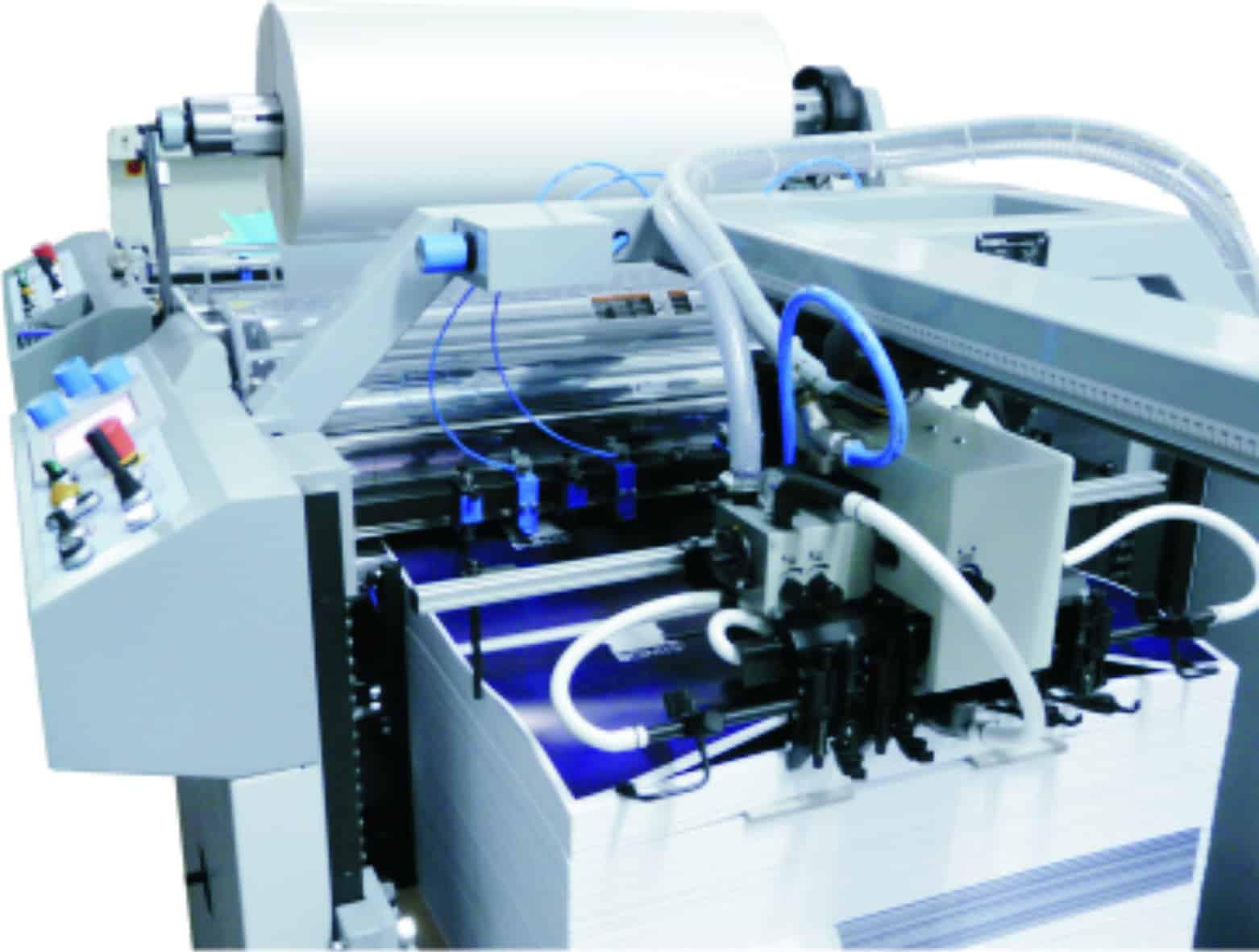
Hot lamination involves permanently combining paper and a thin protective foil (matt/gloss/soft-touch) using increased temperature and pressure. The process takes place in sheet or roll laminating lines and includes:
- Substrate preparation – the paper is dedusted, stabilized and moisture conditioned to minimize waving.
- Application of thermal glue – the adhesive layer (usually EVA, PU or hot-melt) applied to the foil is activated by heat.
- Merge – paper and foil pass through a set of heating rollers, where adhesion occurs over the entire surface.
- Cooling and guidance – heat dissipation stabilizes the laminate and prevents the sheets from "floating".
- Quality control – assessment of adhesion, uniformity, lack of bubbles and scratches.
A well-set process eliminates microbubbles and ensures a perfectly smooth surface, which is crucial for luxury brands and product photography.
What paper and grammage are used in laminated bags
Standard for laminated bags is a smooth chalk base (art print) with high opacity and an even profile. It ensures excellent color reproduction, fine details and smooth tonal transitions. The most frequently used grammages:
- 170 g/m² – smaller and medium formats (jewelry, cosmetics, accessories, folders)
- 200 g/m² – very large formats, with heavy loads.
Reinforcing the bottom (solid cardboard 350-700 g/m²) and gluing the edge overlaps improves the bag's stiffness and resistance to crushing.
What a bag made of laminated paper looks like
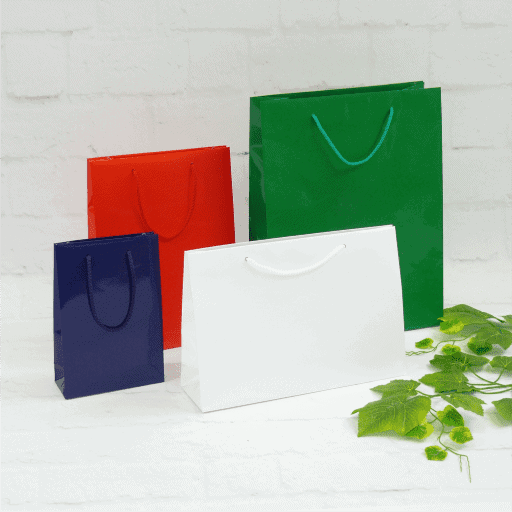
Laminated bags are distinguished by a perfectly smooth surface and "full" color. Depending on the foil, we get different effects:
- Glossy – high color depth, strong contrast, wet look effect.
- Matte – muted, elegant reception; less light reflections.
- Soft-touch – velvety to the touch, exclusive layer with slightly subdued colors.
The handles are selected according to the image and load: PP/BA strings, braided, cotton or ribbons (satin/gross). The edges are even, the bends are "clean", and the print lines are perfectly covered with laminate, which gives a consistent, premium look.
Applications of laminated bags
Thanks to durability and aesthetics laminated bags are a natural choice for brands that need packaging to "sell" the experience:
- Fashion & lifestyle – boutiques, accessories, footwear, additions.
- Cosmetics and perfumeries – gift sets, product launches.
- Jewelry and premium gifts – jewelry, watches, corporate gifts.
- Spirits and delicatessen – reinforced formats for bottles and sets.
- Events, fairs, conferences – welcome packages, catalogues, press materials.
Printing and finishing on laminated paper
Provides the highest quality on laminated bags offset printing (CMYK + possible special colors). After lamination, numerous effects are possible to enhance visual and tactile qualities:
- Hot stamping (gold, silver, colors, holography) – spot metallic shine.
- Embossing (emboss/deboss) – raised or recessed logo/ornament.
- Selective UV varnish – contrast of gloss on matte or vice versa (drip-off).
- Pantone – precise brand colors combined with soft-touch/matte lamination.
A sensible practice is to print before lamination (for coverage and sharpness), and then apply the foil and any additional effects. This way the graphics are protected from fading and micro-abrasions.
Summary
Laminated bags combine durability with the highest aesthetics. The appropriate selection of paper (170–300 g/m²), foil type (gloss/matt/soft-touch), structural reinforcements and appropriate printing and finishing workflow provide a result that really enhances the perceived value of the brand. This is packaging that works both for sales and image – from boutiques to special events.
FAQ – frequently asked questions about laminated bags
Which foil should I choose – gloss, matte or soft-touch?
Gloss enhances color and contrast ("glossy" look), matte gives elegance and reduces reflections, and soft-touch provides a velvety, premium "feel". The choice depends on the nature of the brand and the type of graphics.
What paper weight is most often used?
For small/medium formats usually 170-200 g/m², for standard shopping bags 210-250 g/m², and for large and heavier applications 250-300 g/m², with a reinforced bottom.
Does lamination hinder recycling?
Lamin limits the ease of fiber recovery, but many recycling plants can handle thin films. It is worth considering PP foils with reduced thickness and design in accordance with the "design for recycling" principle.
What finishes work best on laminate?
Hot-stamping, embossing and selective UV. On matte and soft-touch, the gloss-matt contrast gives a particularly impressive result.
Are laminated bags suitable for heavy products (e.g. bottles)?
Yes, provided that the weight is appropriate, reinforcements (bottom, pleats) and properly selected handles (e.g. braided PP cord), as well as careful control of the quality of gluing.