
Buying guides
Company bags for trade fairs – a complete guide for exhibitors
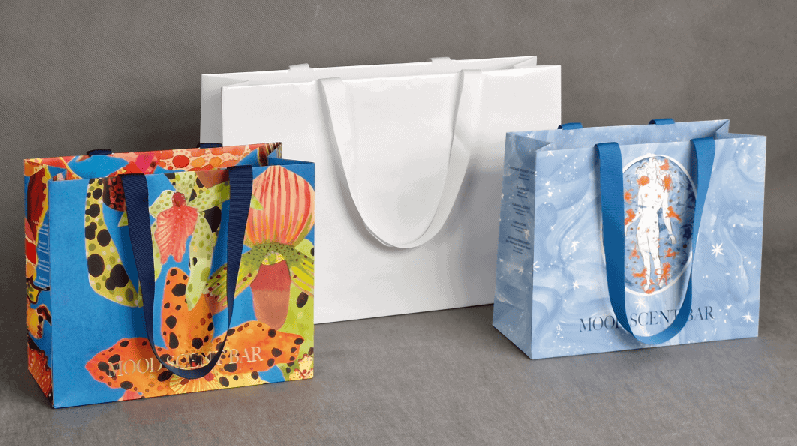
September is the beginning of the fair season in Poland and Europe. A well-designed corporate bag works like a mobile billboard: it moves around the hall, returns to the hotel and to the recipient's office, and often lives many weeks after the event. Below you will find an expert guide that will help you choose the right type of bag, size, printing technique and logistics for your industry and marketing goal.
1. Why a company bag determines your effectiveness at trade fairs
Company bag is one of the few carriers that actually moves around the entire hall. The visibility of the logo increases exponentially with the distance traveled by the participant carrying the materials. A well-chosen bag:
- Increases memorability brands in the visual crowd of trade fairs.
- Makes it easier to collect leads – we are more willing to accept an offer if we have a convenient "place" for the materials.
- Alive after the event – returns to the office, is used many times, multiplying contacts with the logo.
The key is to fit the bag to weight and dimensions materials, intensity of wearing and brand style.

2. Types of bags and when to use them
2.1. Kraft paper bags (smooth and ribbed)
The most versatile and economical. Great for A4 catalogs, leaflets, light samples. Brown (kraft) paper communicates eco-friendliness and naturalness, white – purity and premium. Ribbed versions increase the feeling of “texture.”
When: mass giveaways, high-traffic events, budgets per item under control.
2.2. Premium laminated bags
Gloss or matte laminate, often with enhancements (hot-stamping, 3D varnish). More rigid, elegant, moisture-resistant. Ideal for heavier catalogs, boxes with demo products.
When: Premium brands, VIP presentations, conferences accompanying trade fairs.
2.3. Kraftlux / mass-colored paper bags
Premium “eco-luxe” segment: intense paper colors, cords or ribbons, often thicker grammage. They give a “boutique box” effect while maintaining the paper nature of the material.
2.4. Fabric bags (cotton, non-woven)
Reusable, very durable. Higher unit cost, but highest potential for long logo life. Good for limited quantities, VIP programs, and as a prize in a booth contest.

3. Sizes and ergonomics (catalogs, samples, gadgets)
Choose the size according to the contents. Most common trade fair needs:
- A4 + leaflets: approx. 24 × 9 × 33 cm – safe for A4 catalog in hardcover.
- “Medium” materials and gadgets: approx. 24 × 11–11 × 32 cm.
- Larger sets / demo boxes: approx. 32 × 13 × 42 cm.
- “Hand-out” of lightweight leaflets: approx. 18 × 8 × 22.5 cm.
Pay attention to depth (side) – it determines whether the catalogs don’t “bulge” the sides. Reinforced bottom (cardboard) and appropriate grammage (e.g., 350 g/m² for kraft, 850 g/m² for premium) significantly increase comfort.
4. Finishes, handles, and durability
- Twisted handle – craft classic; durable and economical.
- Flat handle – comfortable with heavier contents, ergonomic to wear.
- Polyester / cotton string – premium, soft grip, great in Kraftlux and laminated.
- Ribbon – boutique effect; for presentation and the fashion/beauty segment.
It is worth strengthening the bottom and upper folds for heavier materials; you will reduce the risk of "stretching" the handles during intensive wearing throughout the day.
5. Printing and finishing – what to choose for the fair
- Screen printing – the king of uniform, juicy Pantone colors; very durable. Perfect for logos and simple slogans.
- Digital printing – quick personalizations, shorter series, gradients and photos; great for multiple language versions.
- Hot-stamping / foil – gold/silver gives a “wow effect” at a distance of several meters.
- Emboss/Deboss – convex/concave embossing: subtle premium look, especially in VIP areas.
- 3D selective varnish – highlights graphic elements, increases "Insta-attractiveness".
In halls with intense light, contrasts (dark paper + light print or vice versa) work well. Avoid small text close to the edges – the bag works and the safety margin improves readability.
6. Industry recommendations
IT & electronics
Often heavier catalogs and samples (power banks, cables). Recommendation: premium laminated or Kraftlux with reinforced bottom, size for A4+, string handle. Printing: screen printing + hot-stamping on the logo.
HoReCa and food
Lightweight materials + samples (sachets, small boxes). Recommendation: kraft white/brown 24×11×32 cm, twisted or flat handle, 1–2 Pantone colors. Eco-friendly communication is welcome.
Cosmetics & pharma
Aesthetics and premium are a “must”. Recommendation: laminated matt or Kraftlux with ribbon, refinements (3D varnish, hot-stamp), pastel palettes and high contrast logo.
Fashion & retail
A bag as a style element – it will survive after the fair. Recommendation: Kraftlux or laminated, large front, minimalism, logo embossing.
Construction & B2B industry
Heavier technical catalogues. Recommendation: stronger kraft papers (90-100 g/m²), flat handle, reinforced bottom, size 32×16×40 cm.
Education & public institutions
Large volumes, economics and ecology. Recommendation: kraft 24×11×32 cm, 1 color, clear coat of arms/logo and legible typography.
7. September logistics: quantities, lead time, transport to the hall
- Quantities: plan for 1.2-1.6× expected booth traffic (depends on attractions/gadgets).
- Series: consider 2 batches – main and reserve (e.g. 70% + 30%).
- Lead time: standard kraft faster; premium and refinements require longer production time.
- Packaging: cartons of 100–200 pieces with a clear description; one box “open” for ongoing service.
- Transport: delivery the day before to the hall or hotel; you will avoid queues at logistics windows.
8. Ecology, compliance and pro-environmental communication
Organizers are increasingly promoting the reduction of single-use plastic. The communication “FSC, recycling, mass-dyed paper, water-based paints” strengthens the image. Remember to use accurate wording – consumers are sensitive to greenwashing. Add a recycling pictogram and a short eco slogan.

9. Budget and ROI: how to calculate cost per lead
It's worth counting company bag cost for effective contact. If you spend PLN 3,000 on 1,000 bags, and the bag accompanies a conversation with 40% of visitors, the real cost of the "activating" bag is PLN 3,000 / 400 = PLN 7.50 per conversation (with the brand in the customer's hands). In many industries, this is a fraction of the value of the lead acquired.
Search for savings in optimal format i print colors (e.g. 1-2 Pantone), not in line weight. Too thin a wall = risk of tearing and loss of image.
10. Preparation schedule (checklist 4-6 weeks before the fair)
- T–6 weeks Brief: material list for the bag, expected weight, aesthetics, quantities.
- T–5 weeks Selection of bag type, format, handles; confirmation of printing techniques.
- T–4 weeks. Design and DTP (checking bleeds, margins, white coverage in hot-stamp).
- T–3 weeks. Production (proof checks, color trials for critical Pantones).
- T–1 week. Packaging, logistic labels, delivery plan to hall/hotel.
- D–1 / D On-stand distribution: one box opened, the rest “in the back”.
11. How to order: brief, specification and production tips
In the brief, provide:
- Bag type (kraft / laminated / Kraftlux / fabric) and paper color.
- Dimensions (width × side × height) and approximate content weight.
- Handle (twisted, flat, cord, ribbon) and color.
- Printing technique (screen printing / digital / hot-stamp / emboss / UV 3D).
- Quantity, delivery date, delivery location (hall / hotel / warehouse).
Tips: leave a safety margin for the graphics, avoid micro-texts near the edge, remember about vector files (PDF/X, AI, SVG) and Pantone for screen printing.
12. FAQ – most common exhibitor questions
Is it worth making two types of bags? Yes: economical “mass” kraft + a shorter premium series for VIPs.
What about moisture during transport? Laminate and bottom reinforcements help; transport in collective film.
Personalization per trade fair day? In digital printing – absolutely (e.g., QR for the day’s offer).