
Advice and inspiration
Screen printing – bag printing technique
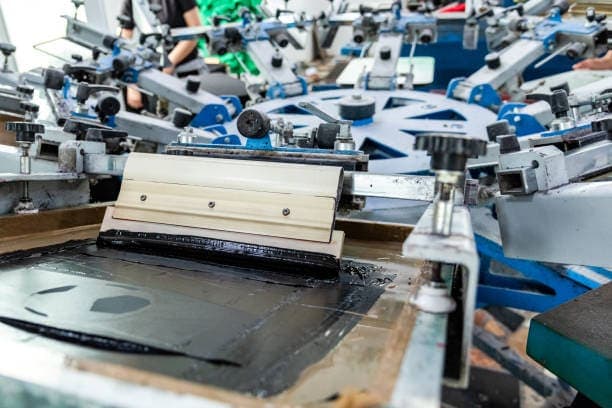
Table of Contents
Screen printing is one of the most durable and precise printing techniques used in the production of paper packaging. In the company AWIH we use screen printing to apply logos, graphics and advertising information to bags, providing our customers with quality they can trust.

What is screen printing?
Screen printing is a printing technique that involves squeezing paint through a special sieve – a mesh stretched over a frame. Areas that are not to be printed are blocked with a photosensitive emulsion. The paint penetrates only through exposed parts of the mesh, creating a durable and expressive print.
In industrial practice – such as ours – aluminum frames are used with a mesh with a density adapted to the design (usually 77-120 lines/cm). The paints used in screen printing are characterized by high viscosity and high resistance to external factors.
Screen printing production steps
1. Preparation of graphic design
We prepare the graphic design in a vector format (e.g. PDF, AI), which allows for precise separation of color layers. A separate sieve is prepared for each color.
2. Matrix exposure
A mesh is stretched over the frame and covered with a photosensitive emulsion. After drying, it is exposed to UV light through foil with graphics. Places impervious to light are washed out – this is where the paint passes through.
3. Printing
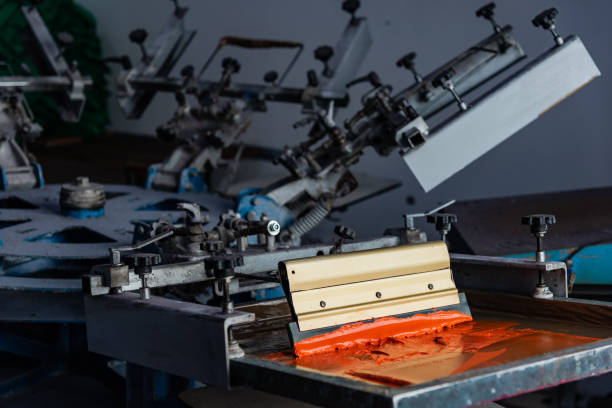
The finished screen is placed on a bag or sheet. The paint is spread over the mesh with a squeegee (rubber knife), pushing it through the open holes directly onto the paper.
4. Drying the print
The print is fixed in an IR tunnel or with hot air. We use quick-drying paints that are resistant to abrasion and moisture.
Advantages of screen printing
- Durability: the paint penetrates deeply into the structure of the paper and does not wear off quickly.
- Saturated colors: intense colors possible, also on dark backgrounds.
- Special effects: possibility of using glitter, metallic, convex and fluorescent paints.
- Accuracy: high printing precision even with thin lines and small details.
- Profitability: an economically advantageous technique for medium and large volumes.

Packaging use
At AWIH we use screen printing mainly in the production of:
- cotton bags with print,
- paper bags with cotton or flat handles,
- gift and fashion boxes,
- advertising boxes and labels,
- promotional materials for trade fairs and events.
Thanks to screen printing, we are able to achieve a prestigious effect – especially in combination with mass-dyed paper, gilding or selective varnish.
Why screen printing at AWIH?
At AWIH, we combine experience with modern technology. Our screen printing stations are equipped with precise tables and tunnel dryers, which allows for the production of large batches while maintaining perfect print quality.
We offer:
- professional advice on selecting printing technology,
- prints starting from 100 pieces,
- a full range of colors, including Pantone,
- quality control at every stage of production.
Contact us, if you care about durable and professional screen printing on your packaging.